image
image

How to spot the signs of fleas and ticks in the house

We know that as a pet parent, the home is somewhere you can enjoy all the love and laughter that comes with having a four-legged member of the family. But, sometimes, we end up opening our doors to more than we bargained for.

While no-one wants to find a tick or flea in their home, it can happen, and it doesn’t mean your home or your pet is dirty. It just means there are a few steps needed to sort the situation and prevent it from happening again. Our pet experts have the know-how to help.

Is it a tick?

Ticks have eight legs and differ in size depending on whether they’ve been attached to a pet or person and have fed on their blood, or not. They can be as small as a sesame seed or as big as a coffee bean and, unlike fleas, they don’t jump or hop.

Ticks found in the house have usually fallen off a pet or a person’s clothing. Thankfully, if they’re not attached to anyone right now, it’s easier to get them out of the house and stop them being any more of a problem.

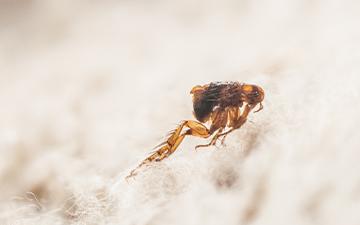
Is it fleas?

There are a few tell-tale signs to identify if there is a flea infestation going on in the home.

Itchy red spots on the humans in the home

The first thing you might notice is itchy red spots appearing on your own skin. In a home infestation, fleas will sense us humans as a potential host and hatch out from carpets, cracks in the flooring and furnishings to try us out for a feed before realising they’ve bitten the wrong ‘host’. Fleas don’t live on humans but will give us a good bite to check us out first. These bites are recognisable as itchy red spots, particularly around the ankles in the case of a home infestation.

Tiny white things on the floor or pet bedding

Body Copy

Flea eggs and larvae are pretty small and hard to spot. If there’s a home infestation, you might just see things that look like grains of sand or salt, or little white caterpillars on the floor or other places our pets go, such as their bed or a sofa.

The things that look like little grains of sand will be flea eggs. They’re white, oval and only about half a millimetre long, so it’s easy to mistake them for a bit of dry skin or something less harmful than a flea egg.

The white caterpillar-looking things will be flea larvae. Flea eggs hatch into flea larvae that burrow into carpets, furnishings and nooks and crannies – such as skirting boards and between floorboards – so you might not even see them at all. They’re about 2-5 mm long.

Fleas eggs close up Fleas eggs close up

Scratching pets

If pets are scratching, overgrooming or have bits of flea dirt on them (looks like normal dirt but goes reddish brown when on damp paper), these are signs they have an infestation. And a pet infestation inevitably leads to a home infestation.

If there’s a heavy infestation, the little dark-coloured insects can sometimes be seen darting around a pet’s fur or can cause our poor pets to scratch and groom more than usual.

Check out our 5-step guide to getting rid of fleas in the house if you find a home flea infestation going on.

Dog scratching due to fleas

Not got a pet but still seem to have fleas?

Strange as it may seem, it’s possible. There’s usually a simple explanation involving visiting pets or previous occupants’ pets. Of course, you’ll want to know how to sort the issue, so check out our insights on how fleas get into homes with no pets and how to get your house back how you want it – flea free.

What a home infestation really means

To understand how these signs of a home infestation have come about and how to solve the problem, we need to know a bit about how the flea life cycle works. There are two key points:

  1. Each female flea on a pet can lay up to 50 eggs a day. These fall off the pet around the home.

  2. The fleas we see on our pets are just 5% of the total flea population in an infestation. That’s because 95% are in the pet’s environment (our homes!) as other flea life stages.

The flea life cycle

  • Adult fleas jump on our pets and feed and breed while on them. 
  • The flea eggs that adult fleas lay fall off our pets wherever they go and develop into flea larvae.
  • Flea larvae burrow into carpets, furnishings and cracks, away from the light, and spin cocoons to become flea pupae.
  • Flea pupae contain developing, immature fleas. When they’re fully grown and detect warmth, vibrations and carbon dioxide from an animal (or from us), these new fleas hatch out and the life cycle starts all over again.

How to solve a home infestation

Because of the way the flea life cycle works, there are a few things to do to get on top of an infestation. We’ve got all the advice you need in our five-step guide covering how to get rid of fleas in the house.

If you’ve not seen signs of an infestation yet, it’s worth bearing in mind that fleas can be hard to spot until an infestation becomes quite severe.


How to help prevent a home infestation

It’s always best treat your pet with parasite protection according to their lifestyle. For example, cats who go outdoors are at higher risk of picking up fleas, ticks and worms than indoor only cats. Dogs who go to areas where wildlife (such as foxes and hedgehogs) is found will be at higher risk of parasites than those who don’t. Ask your vet what they’d recommend for your pet’s lifestyle.

Take a look at our three-step guide to flea prevention for cats and dogs

Flea infestations can seem daunting, but with the right actions and some patience, it can be managed, and normal life will resume.

Get answers from the experts

Got a question about fleas, ticks or worms? We can help! Take a look at our FAQs or send us a message.

Two Paragraphs
#PETPARENTCLUB

Join the #PetParentClub

We’ve got an amazing community of dedicated pet parents on our social channels. You’ll find pet care tips and cute pics, plus advice from our pet experts. We can’t wait to welcome you to the club!