


How to treat worms in dogs and puppies
Intestinal worms are most often treated using either a worming tablet (given orally) or a topical wormer (a spot-on treatment that’s put onto the pet’s skin). FRONTLINE® WORMER is a tasty chewable pork-flavoured tablet that makes treatment a treat rather than a chore!
Puppies need to be protected from roundworms from 2 weeks of age, whereas older puppies may need treatment for tapeworms too. Some products also treat for hookworms and roundworms which are also common in the UK.
How often should I worm my dog?
How regularly we should treat our dogs for worms depends on their lifestyle and who they live with.
Generally, dogs need to be dewormed at least four times a year – or every three months. However, if your dog loves to scavenge, or someone in your home is pregnant, elderly, or you have young children, it’s important that you treat your dog more regularly – experts recommend up to once a month in these circumstances. If you’re unsure, check with your vet or a qualified professional in a pet store before you change the frequency with which you deworm your dog.
Whatever worm treatment frequency your dog receives, remember to use the treatment at this interval to stay on top of worms. Gaps between treatments means a worm problem can build up and cause health concerns – and we don’t want that.


How often should I worm a puppy?
Puppies are at risk of these parasites because they can become infected with worms from their mothers. And as they’re only little, they’ll need a worm treatment pattern and product that’s right for their age and body weight.
From weaning until they’re 6 months of age, puppies should be wormed every month. If you have any concerns, you can ask your vet - they will let you know what’s best for your pup.
What else can I do to prevent worms in dogs and people?
-
Regularly clean their food and water bowls
-
Always pick up their poo, as it can contain worms or worm eggs
-
Prevent our dogs from scavenging (if we can) so they don’t pick up worms from other animals
-
Avoid unprocessed raw meat diets – these could contain worm life stages
-
Wash our hands after handling our pets and before eating food
-
Wash all fruits and vegetables before eating them, in case there are any worm eggs on them
-
Cover any children’s sandpits when they’re not in use, so animals or wildlife don’t use them as a toilet
-
Wear gloves when gardening, in case there are worm eggs in the soil


What if my dog won’t take tablets?
Dogs will sometimes wolf down a tablet if it’s inside something they’d much rather eat. Or if you want to be sure they’ve taken the tablet, you can now get dog wormers in the form of tasty chewable tablets, such as FRONTLINE® WORMER. It’s easy to give to your dog – some take it like a treat, or it can be given with food. And because it kills intestinal worms commonly found in the UK (roundworms, tapeworms, whipworms and hookworms), it means your pet is protected. It can be given to puppies over 2 weeks of age and weighing over 3kg.
Why does treating my dog for fleas help with worms too?
Fleas can carry worm eggs, so if our dogs lick a flea off themselves and swallow it, they could be ingesting worm eggs at the same time. That’s why regular flea treatment helps protect dogs from worms too.
If you have a puppy, remember they can only be treated with FRONTPRO®, FRONTLINE PLUS® or FRONTLINE TRI-ACT® from 8 weeks old and at least 2 kg.
Worms aren’t the loveliest things to think about, but the good news is, taking these steps can make a big difference in keeping our dogs and puppies healthy – as well as the other members of our families.
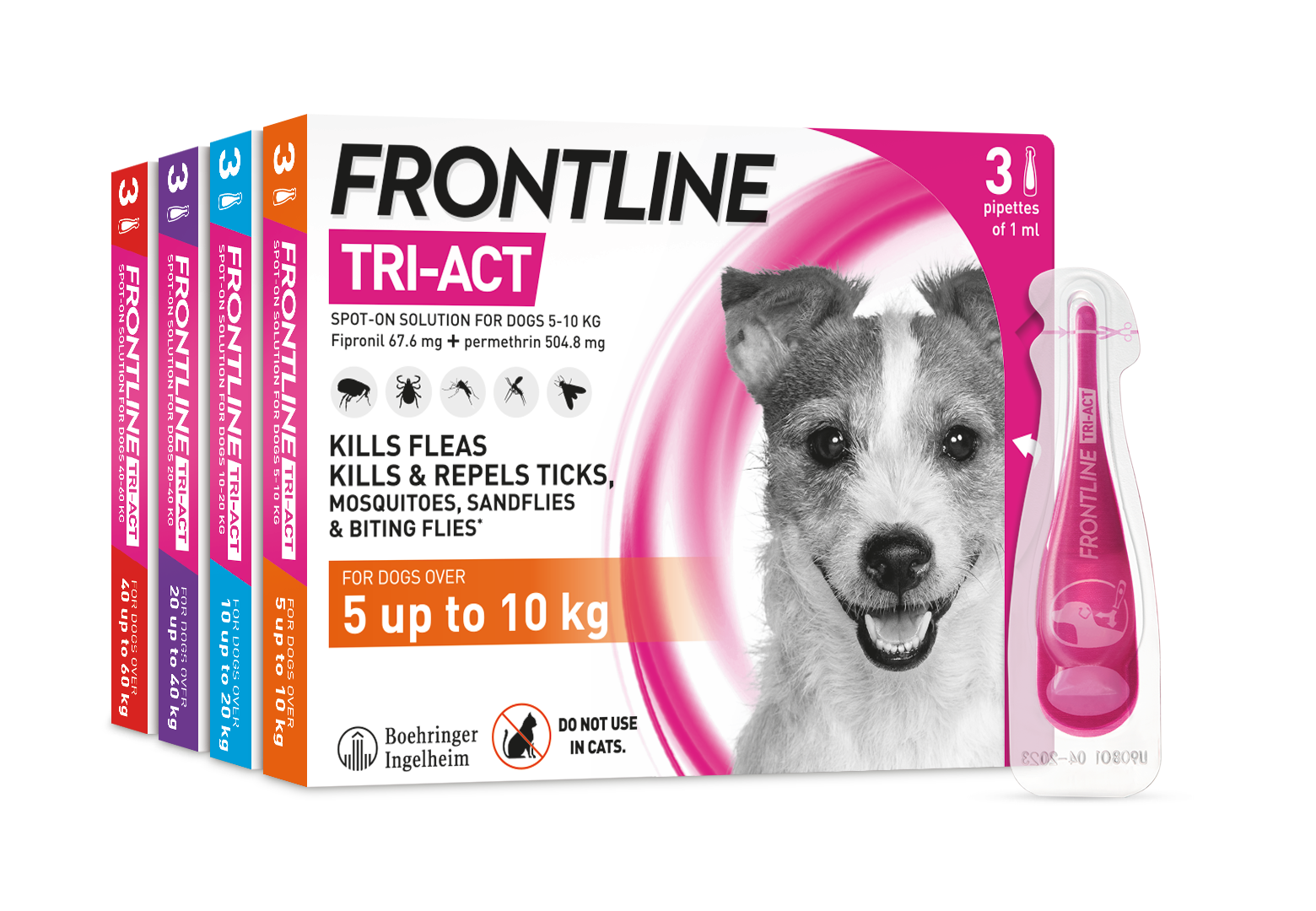
Take your dog’s parasite protection to the next level
FRONTLINE TRI-ACT® has a unique formula that kills faster1 and repels more2 disease-carrying parasites than the next leading competitor brand.
1 Compared to next leading non-prescription competitor brand and when used monthly.
2 Compared to next leading non-prescription competitor brand with repellent activity.
Worms aren’t the loveliest things to think about, but the good news is, taking these steps can make a big difference in keeping our dogs and puppies healthy – and the other members of our families too!
MORE FROM WORMS


Intestinal worms can be harmful to our dogs and to people (especially children), so it’s important to de-worm your poochy pal regularly all year round.


Fleas are out in full force during the summer, hiding in homes, parks and gardens. Learn all the essentials as we teach you how to spot fleas on your dog.


Find out how you can keep your dogs and puppies protected from ticks and keep them happy and healthy, with advice from the pet experts at FRONTLINE

Keeping your dog clean is important for their health. If you're worried about smelliness in your four-legged friend, check out our pet experts' tips on bathing your pup!


Everything you need to know if your puppy has fleas, ticks or worms, or to prevent them.

Join the #PetParentClub
We’ve got an amazing community of dedicated pet parents on our social channels. You’ll find pet care tips and cute pics, plus advice from our pet experts. We can’t wait to welcome you to the club!


